
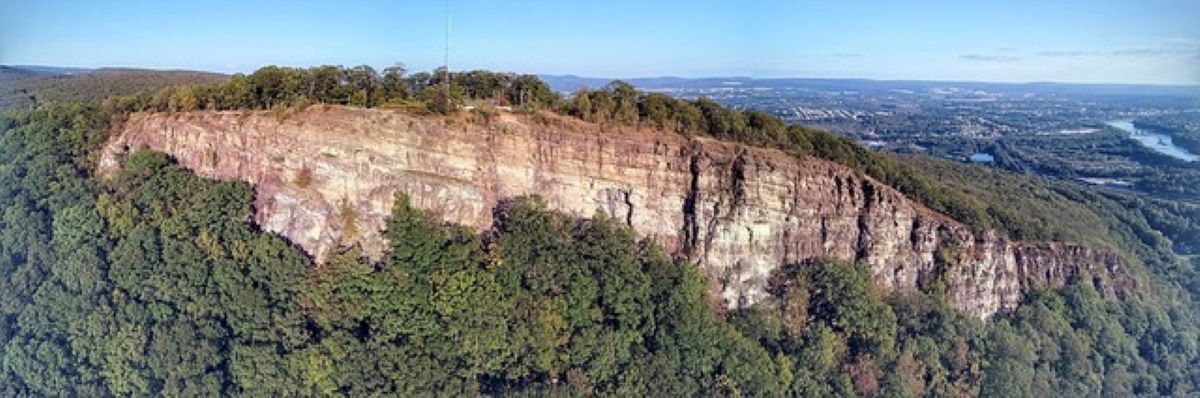
The Great Valley at Wyoming, PA
In the Afterword, the reader discovers that she is the fourth stage of history. This leads to the larger question; How am I affected by my local, national, and world history? The reader is challenged to develop individual concepts to follow the ideas working in history. Striving for Insight leads to understanding the context in which we live.
On your individual stage of history you discover your consciousness, the conflicts you are faced with, and sacrifices others have made for you. You learn to make choices, overcome limitations, and discover the subliminal messages you have been exposed to. You see the dogma, lies, and harm that are spread to the masses.
The questions become; What are my real motives, my healthy mental images, and my true power of imagination? You discover how people search for truth in history.
Startng in this century, Part One introduces modern history using Northeastern Pennsylvania as the example for local history, the U.S.A. for national history, and world history in China, the Middle East and Europe. Then the reader goes back to the 20th Century through two more chapters with local, national, and world history.
During WWI the second German Empire, the Austrian-Hungarian Empire, and the Ottoman Empire fell. After WWII, the American Empire replaced the British and the French Empires. The opening statement of the new American Empire was made in 1945 when two atomic bombs were released over Japan. The Cold War and the American War in Vietnam soon followed. The Bretton Woods Conference had made the dollar the world´s currency. The Marschall Plan invested in Europe. The casino economy based on debt, slowly developed before the Glass Steagall Act of 1933 was repealed in 1999. The housing bubble burst in 2008, causing the American Empire to deal with global financial meltdown. It is very important to continually learn about the realities of the American Empire.
Civil Rights and segregation from the Jim Crow laws in the 19th Century to the Black Lives Matter movement in this century, are important parts of American culture. We fought Indian colonial wars east of the Mississippi and west of the Mississippi. Was it our manifest destiny? You will discover how our nation treated our Native Americans from the Treaty of Greenville of 1795, to the Termination Act of 1953 to end all agreements and the Indian Relocation Act of 1956.
America not only developed Indian reservations, but also slave colonies, and brought in millions of immigrants as cheap labor. After the Civil War, Black Americans were disenfranchised and later legally segregated by the Ferguson decision. The Brown vs. Board of Education decision in 1954, the Civil Rights Act of 1964, and the Voting Rights Act of 1965 gave hope, yet Martin Luther King Jr., created the Washington Spring Project in 1968 to remove poverty in our country.
Part Two covers history from ancient times to the 19th century beginning with; geology, geography, and natural history from Northeastern Pennsylvania, the Native Americans, and the first Europeans in Pennsylvania.
The civil wars in PA between the Connecticut settlers and the Pennsylvanians are viewed within the American Revolution. There follow major political revolutions in the USA, France, and Saint Dominique. The revolution on Saint Dominique was a slave revolt that defeated Emperor Napolean of France after twelve years. The merchants and governments of the Double Trade Triangle decided to move all coffee production to Brazil, all sugar to Cuba, and all cotton plantations to North America.
The Constitution of the United States of America from 1787 to 2026 is built on compromise. Taking the presidential oath, men have promised to protect and defend it. Our Founding Fathers were inspired by the British Enlightenment and the French Enlightenment. They strove for reasonable checks and balances to power. To serve the federal government, they restricted the power of our states. This book introduces the Articles of the Constitution, the first ten amendments known as the Bill of Rights, and then further amendments since 1791.
The British Empire in the Atlantic Trade Triangle developed into the Asian Trade Triangle. These two trade routes formed the Double Trade Triangles that drove the industrial revolutions and created new financial centers in New York, London, and Hong Kong. You will learn the consequences of the trade triangles from the American, African, British, Indian, and Chinese perspectives.
You will also discover the effects of the Enlightenments in England and France, the repression of the Enlightenment in Germany, and the promise of a future enlightenment in American.
Key developments in science are presented throughout the book, along with many of the most important scientists. The inventors of new machines and electricity are well documented.
Part Three introduces history powered by electricity to this day. Revolutions change the way of life on all stages of history. The reader learns about the role of land ownership, labor, capital, and capitalism in America. Finally, revolutions in commerce and finance are addressed in relation to the enormous impact of information technology in the 20th Century and the 21rst Centuries.
I include an Index to Ideas to help you go deeper into some of the main ideas in history covered in this book. When your individual concepts are filled with the ideas in history, you begin to understand the context within you live. This not only increases your awareness, but it develops your personality. Through independent, critical thinking, you gain a feeling for what people have contributed year after year.
I have categorized conclusions on the Individual Stage of History, the Common-wealth, Civil Rights and Segregation, the United States Constitution, and the American Empire.
The common-wealth of the U.S.A. was founded in the Declaration of Independence 250 years ago.The Constitution of the United States is an answer to that declaration. Its preamble opens with We the People. How has America evolved since then? Where have we made progress and where have we made big mistakes?
Central Park and the New York Subway system are definitely success stories. One obvious mistake was to dismantle our electric streetcar systems and railways on the national and local stages. Another mistake is repeated when individuals and corporations no longer pay taxes to the states and to the U.S.A. Instead, our citites, states, and nation are in debt - not carried by our common-wealth. What will the future bring for our water, air, public lands, police forces, taxes, educational systems, and health care services?